


Mastering Hog Hunting Techniques
The Ultimate Guide to Successful Hog Hunting
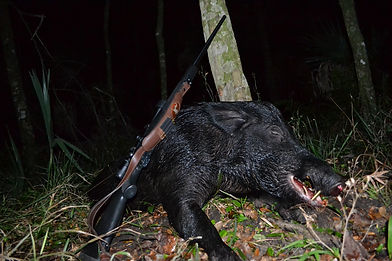
Welcome to the ultimate guide on mastering hog hunting techniques. Across the country, wild hog populations are expanding at an explosive rate, causing significant damage to agriculture and native ecosystems. For landowners and conservationists, this presents a serious challenge. For the dedicated hunter, it provides an exclusive and thrilling pursuit. This guide is designed to fill that gap, providing you with the knowledge to hunt these animals effectively, ethically, and successfully. You will learn a variety of proven field strategies, from the stealthiness of stalking to the high-tech advantage of thermal optics. We will review important tips on gear, shot placement, and reading the land. Our goal is simple: to help you become a more capable and responsible hunter, primed to tackle one of North America's most formidable game animals.
Why Hog Hunting Matters
Understanding the Challenge and the Reward of Hog Hunting

To understand why hog hunting matters, it is essential to understand the challenge and the reward of hog hunting. Feral hogs are not native to the United States; they are an invasive species with a staggering environmental impact. Their destructive rooting behavior tears up farmland, decimates crops, and destroys sensitive wildlife habitats. A single group of hogs, known as a sounder, can ruin an entire field overnight. The impact of these invasive animals costs the U.S. agriculture industry an estimated $1.5 billion annually. Consequently, hunting is the primary tool for population control, making every successful hunt a direct contribution to conservation and land management. The benefits of hog hunting stretch outside ecological management. It is a challenging and rewarding activity that tests your skills in tracking, stalking, and marksmanship. These animals are intelligent, tough, and have a keen sense of smell, making them a particularly formidable quarry. Furthermore, the reward for a successful hunt includes a freezer full of delicious, organic, and sustainable wild pork, a lean, low-cost, and flavorful alternative to store-bought meat.
Proven Hog Hunting Techniques for Every Hunter
There is no single "best" way to hunt these animals, but there are proven hog hunting techniques that every hunter can utilize, and the most effective approach depends on the terrain, time of day, and local laws and regulations. A successful hunter knows how to adapt, blending different strategies to match the situation. If you prefer the primal calm of a stalk or the modern edge of technology, learning these proven hog hunting techniques will dramatically increase your chances of success. Below, we break down the most effective methods used by experienced hunters across the country.
Stalking and Still Hunting

Stalking and still hunting, or spot-and-stalk hunting, is a lively and immersive method that puts you on the ground, moving slowly and silently through game rich territory. The key is to use your senses to locate hogs before they detect you. Look for signs: fresh tracks in the mud, overturned soil from rooting, coarse hairs caught on barbed-wire fences, and muddy rubs on trees and posts. Still hunting is a slower approach in which you move a few steps, then pause for extended periods to scan and listen. For both methods, wind direction is your most vital consideration. A hog’s sense of smell is its greatest defense, so you must always keep the wind in your face. Effective scent control, using scent-eliminating soaps and sprays, and storing your clothes in airtight containers, is mandatory. Your clothing and footwear should be chosen for silence; soft, quiet fabrics and well-worn boots are preferable to noisy, stiff materials.
Stand Hunting and Hog Hunting Over Bait

If stalking is the art of pursuit, stand hunting, and hog hunting over bait is the art of the ambush. This technique requires setting up a concealed position, whether a tree stand, a ground blind, or a natural hide overlooking an area with active trails. Prime locations include established travel corridors, water sources such as ponds and wallows, and baited sites. Baiting is a highly effective strategy for drawing game to a predictable location, but it is necessary to check your local and state regulations, as laws vary widely. Effective baits can range from sour corn, which emits a strong, attractive odor, to commercial hog attractants. When setting up your stand and bait station, scent control is imperative. Avoid contaminating the area with human odor and approach your stand using a downwind route to ensure animals feel safe visiting the site.
Hog Hunting with Dogs

For a high-adrenaline, fast-paced hunt, nothing compares to hog hunting with dogs. This traditional method commonly involves two types of canines. First, "bay dogs," commonly breeds like Catahoula’s or Black Mouth Curs, use their keen noses to track and locate the hogs. Once they find one, they corner it and hold it at bay by barking, alerting the hunters to their location. Then, "catch dogs," typically powerful breeds such as American Pit Bull Terriers or Dogo Argentinos, are released to physically subdue the hog, allowing the hunter to quickly and humanely dispatch it. Safety is the number one priority in this style of hunting. Dogs must wear protective vests to guard against a boar's sharp tusks, and hunters need to communicate clearly and move decisively. This technique is highly regulated, so it is important to understand the specific legalities and ethical aspects in your hunting area before you begin.
Thermal and Night Vision Hunting

Thermal and night vision hunting has revolutionized the pursuit of wild hogs. They are largely nocturnal, becoming most active after the sun goes down. This is where technology provides a massive advantage. Thermal and night vision optics turn the darkness into your ally, allowing you to spot game from hundreds of yards away. Thermal scopes detect heat signatures, making a hog's warm body stand out clearly against the cooler nighttime landscape. Night vision devices amplify ambient light to create a visible image. Night hunts allow you to pattern and intercept these animals when they are most comfortable and on the move. However, this high-tech approach involves responsibilities. Positive target identification is still critical; you must be 100% certain of your target and what lies beyond it. Many states have specific regulations regarding night hunting and the use of electronic devices, so always confirm the laws before heading out.
Hog Hunting Tips and Techniques for Success in the Field

Hog hunting tips and techniques for success in the field can make all the difference between a productive hunt and a disappointing day outdoors. Beyond the primary methods, a collection of useful skills and knowledge separates the successful hunter from the one who goes home empty-handed. These essential hog hunting tips and techniques cover everything from choosing the right gear to making the perfect shot. Applying this advice to your routine will make you a more efficient, ethical, and confident hunter.
Gear for Hog Hunting

Boars are tough animals, and your gear for hog hunting needs to be up to the task. Your firearm choice should be powerful enough for a clean, ethical harvest. While many calibers will work, some are better suited for the thick hide and dense bone of a wild boar. A quality knife is essential for field dressing, and reliable lights, both a headlamp and a powerful handheld flashlight, are critical, especially if you are tracking after dusk. Always carry a first-aid kit, a dependable communication device, and quality optics, such as binoculars, to scan for game from a distance. Your clothing should be durable enough to withstand briars and brush while remaining quiet and weather-appropriate.
Caliber | Common Firearm Platform | Pros | Cons |
|---|---|---|---|
.45-70 Government | Lever-Action, Single-Shot | Massive stopping power for the largest boars at close range. | Heavy recoil, significant bullet drop at distance. |
.30-30 Winchester | Lever-Action | Proven brush gun, fast handling, effective at close range. | Limited effective range compared to modern cartridges. |
.270 Winchester | Bolt-Action, Semi-Auto | Flat trajectory, great accuracy, effective energy transfer. | Ammunition can be more expensive but readily available and great long-range accuracy. |
.308 Winchester | Bolt-Action, AR-10 | Excellent stopping power, widely available, versatile. | Heavier recoil, lower capacity in some platforms. |
30-06 Winchester | Bolt Action | Very accurate and hard hitting | Requires premium, heavy caliber bullets (preferably Bonded) for ethical kills. |
Shot Placement on a Hog

Proper shot placement on a hog is the foundation of an ethical harvest and a successful hunt. Their vitals are located slightly more forward and lower in the chest cavity compared to a deer's. The ideal shot placement is in the "pocket" just behind the shoulder, which will strike the heart and lungs for a quick, humane kill. A head or neck shot can also be effective, but presents a much smaller target. Avoid the "shoulder shield," a thick plate of gristle on mature boars that can stop poorly constructed bullets. Always understand the anatomy and adjust your aim based on its angle. Be prepared for a follow-up shot, and if an animal runs, wait a reasonable amount of time before tracking to allow it to expire without being pushed further. Many times, a hog will be hit and not exhibit the same drop or buckle like a whitetail. NEVER assume you have missed. Always treat your shot as a good, clean hit. After your shot, always ask yourself, “Was I holding steady?” and “Was I holding on hair?” If the answer to both those questions was yes, then it is time to go and recover your game.
What to Look for When Scouting for Hogs

What to look for when scouting for hogs is one of the most important lessons a hunter can learn. You cannot hunt what you cannot find. Scouting is the foundation of a productive hunt. Learn to identify fresh sign. Look for deep rooting patterns in fields and pastures, muddy wallows in low-lying areas, and rubs where they have scraped their sides against trees or utility poles. Fresh tracks with sharp edges indicate recent activity. For long-term scouting, trail cameras are an invaluable tool. Place them on trails, near water sources, or over bait sites to learn the sounder's size, daily patterns, and times of greatest activity. Knowing their preferred bedding areas, typically in thick, dense cover, will help you plan your approach.
Scent Control for Hunting Hogs

Scent control for hunting hogs is one of the most critical factors in a successful hunt. A hog's nose is its superpower. It can detect human odor from hundreds of yards away on a favorable wind. To defeat this defense, you must be disciplined about scent control. This starts before the hunt: wash your clothes in scent-free detergent and store them in an airtight bag or container. Shower with scent-free soap before heading out. In the field, use scent-eliminating sprays on your boots and gear. Most importantly, always know the wind direction and use it to your advantage. Plan your stalks and your approach to your stand so that your scent is blowing away from where you expect the animals to be.
Hunters Safety and Ethical Hunting
Responsible Hog Hunting Methods
A successful hunt is not simply measured by a notched tag; it is defined through a dedication to hunters safety and ethical hunting. Responsible hog hunting methods guarantee the longevity of the sport and respect for the wildlife we pursue. Hog hunting, with its varied methods and often fast-paced action, demands an undivided focus on safe practices for yourself, your hunt partners, and anyone else who might be in the area.
Hunting Firearm Safety Rules

Hunting firearm safety cannot be compromised. Always follow the four fundamental firearm safety rules: treat every firearm as if it is loaded, always keep the muzzle pointed in a safe direction, keep your finger off the trigger until you are ready to shoot, and be sure of your target and what is beyond it. Hogs often travel in groups, and it is easy for "target fixation" to occur in the excitement; never shoot into a group without a clear shot at a single animal and a safe backstop. When out on a hunt with others, establish clear lanes of fire and maintain constant communication. Wearing blaze orange or pink, even if not required by law for hog hunting in your state, is a smart way to increase your visibility to other hunters.
Understanding Hog Hunting Regulations

Understanding hog hunting regulations can be complex and vary dramatically from state to state, and even by county or specific management area. It is your responsibility to know the laws regarding seasons, bag limits, legal shooting hours, baiting, and the use of dogs or technology. Always have the required licenses and permits. Beyond the law, ethical hunting demands that we practice fair chase, which means not taking unfair advantage of the animal. This includes taking shots only within your effective range to ensure a humane harvest. After the shot, a true hunter makes every possible effort to recover the animal. Finally, proper field dressing and meat handling are important for preserving meat quality and avoiding spoilage, honoring the animal by wasting none of it.
Ready to Master Hog Hunting? Put These Hog Hunting Techniques to the Test

The challenge of wild hog hunting is equaled only by its rewards. It is a pursuit that sharpens your skills, contributes to vital conservation efforts, and puts wholesome food on the table. By applying the comprehensive hog hunting techniques and tips in this guide, you are well on your way to becoming a more effective and ethical hunter. Now it is time to put that knowledge into action and start your next hunting adventure.
Find a Guided Hog Hunt Near You: New to hog hunting or looking for a new location? Connect with our network of trusted outfitters and ranches for a memorable experience.
At Hog Hunting Reviews, we are devoted to supporting the hunting community with expert knowledge and high-quality equipment. Happy hunting and be safe.